
The Public Square · Essay
One major crisis for American cities does not concern concrete or steel but rather care. Long-term care and its supporting systems are as essential as water or public transit, and it is no longer sufficient to treat them solely as ancillary city projects. Having worked with older adults and the organizations that support them for over a decade, my research and experience lead me to believe that this represents an urgent challenge for cities.
Why is this a city problem?
While aging populations affect nations worldwide, the costs are most acutely felt at the local level, particularly in services managed by city leaders. When older adults are unable to navigate stairs or drive, family members may reduce their work hours or leave the workforce entirely, resulting in a loss of valuable experience for the economy.
Cities are the first to experience the effects of an aging population, regardless of their preparedness. The current advantage lies in enabling residents to live longer, maintain health, and age with dignity within their communities.
Is care really infrastructure?
Care constitutes infrastructure, even if it does not always resemble traditional medical systems. For instance, if an 80-year-old depends on a home health aide who uses public transportation, eliminating that bus route is, for her, equivalent to shutting off water to a hospital. The demand for care persists; it simply shifts to families, predominantly women, as unpaid labor.
This strain increasingly manifests itself in the workplace. According to the leave-management firm Sparrow, caregiving leave claims rose (opens in a new tab) from 2.4% in 2020 to 6% in 2025, with the median duration of caregiving leave nearly quadrupling.
Furthermore, because cities often separate residential areas from workplaces, caregivers spend significant time commuting between jobs, childcare, and aging parents. Inadequate transit or urban planning heightens this burden, making the city itself part of the problem.
Who keeps the whole care economy running?
The care system relies on people, and this is where major challenges arise. There are insufficient numbers of aides, nursing assistants, and health workers.
Prior to the COVID-19 pandemic, the number of home care workers per 100 individuals in need declined (opens in a new tab) by 11.6% over six years. Amanda Kreider, the University of Pennsylvania economist who led the study, notes that “it looks as if the decline continued into 2020 (opens in a new tab).”
These positions are demanding, predominantly filled by Black women and immigrants. Half of the sector’s recent growth is attributable to foreign-born workers (opens in a new tab). Escalating housing costs impact the situation, causing workers to endure lengthy commutes and may likely cause them to choose similarly paid fast-food jobs closer to home.
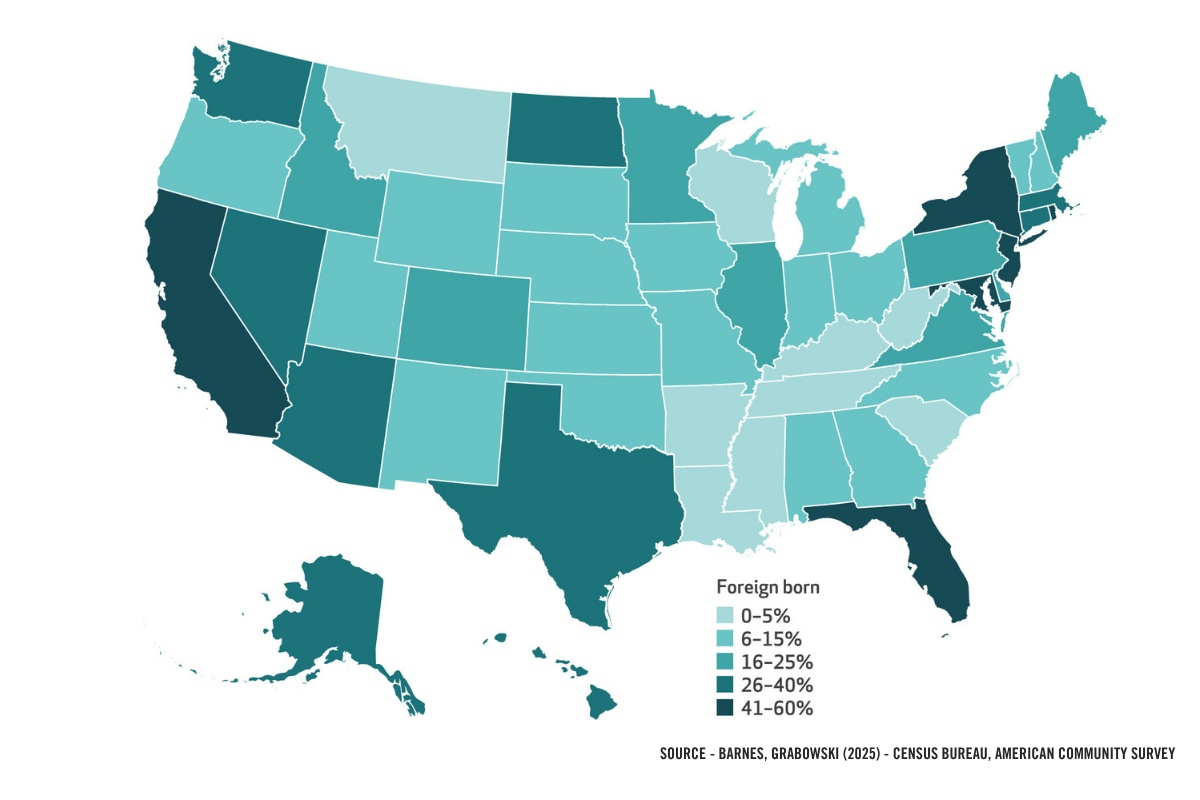
Based on my hiring experience, it is inaccurate to claim that “no one wants to work.” The core issue is that many urban housing and transit policies inadvertently displace these essential workers.
What can a city actually do?
There are actionable opportunities for leaders who feel constrained. Cities generally cannot set wages independently since most states prohibit local minimum wage laws. And the state and federal governments determine Medicaid rates. Still, cities do influence the cost of living.
They can provide care workers with free transit passes, construct affordable housing near hospitals, mandate living wages in municipal contracts, and support cooperatives that give caregivers a stake in their work. By reducing rent and commute times, cities can effectively increase workers’ real income without passing a financial burden to employers.
Design is important, too. Streets that are friendly to older adults cannot stop aging, but they can help slow decline for years.
There is a real challenge, though: when a neglected neighborhood improves, rents often go up, forcing out the low-income seniors who needed the help most. One eviction can break their support networks.
Bogotá faced this issue when building its “care blocks.” The mayor at the time, Claudia López, described the solution as (opens in a new tab) “institutionalizing it to free up time and opportunities for caregivers.” Simply adding a new sidewalk is not enough.

The essential evolution involves shifting from age-friendly to care-capable cities. An age-friendly approach usually involves isolated initiatives, such as adding a senior center or a sidewalk. In a care-capable city, leaders integrate care considerations into every decision, similar to the treatment of water or electricity. In Bogotá, 13 agencies collaborated on caregiving initiatives and deployed mobile units to areas inaccessible to fixed sites.
In the United States, this approach could involve incorporating transit planning into senior housing projects, ensuring broadband access for telehealth, and requiring new buildings to feature step-free entrances and on-site nursing staff. The workforce constitutes a core part of infrastructure; without it, all other systems fail.
Political support for these policies is stronger than many officials anticipate. Seventy-eight percent of Americans favor strengthening (opens in a new tab) the caregiving workforce, and three out of four support making care more affordable and facilitating aging in place.
So where does that leave us?
For local leaders, progress depends less on sweeping mandates and more on consistently integrating a set of key questions within daily decision-making:
1. Ask who will age there. Before approving housing, ask who grows old in it and reaches it car-free.
2. Count the route as care. Before cutting a bus line, weigh how it will impact senior adults or caregivers, not just the fare.
3. Check who gets to stay. When a district or neighborhood revives, ask who can still afford to grow old there.
4. Pull the levers you have. Transit passes, nearby housing, and living-wage contracts raise real pay without setting a wage.
5. Make care part of every decision. Treat the workforce as infrastructure; if it goes, nothing else holds.
America’s aging challenge will not be resolved through a single federal statute. Instead, it will be addressed incrementally, one city agenda item at a time, by those active in local decision-making. The critical issue is whether these individuals recognize the significance of their choices.
Anthony Ormsbee-Hale, MBA, is an executive leader in aging services. He also holds a Master of Public Policy degree from Southern Methodist University.
Request information
To learn more about the Master of Healthcare Administration, Master of Public Administration and Master of Public Policy programs at SMU and download a brochure, please fill out the form. You can also talk one-on-one with an enrollment specialist directly by calling 469-871-6018.
