
The Public Square · Essay
Data centers have been around since the mid-1940s, but their rapid expansion is creating sustainability issues that could last past many of our lifetimes. Across social media (opens in a new tab) and news sites (opens in a new tab), more discussions about data centers are happening. They sometimes speak to the benefits of the centers. Other times, the pieces caution overuse of the tools. Either way, data centers are top of mind for many around the United States and the world.
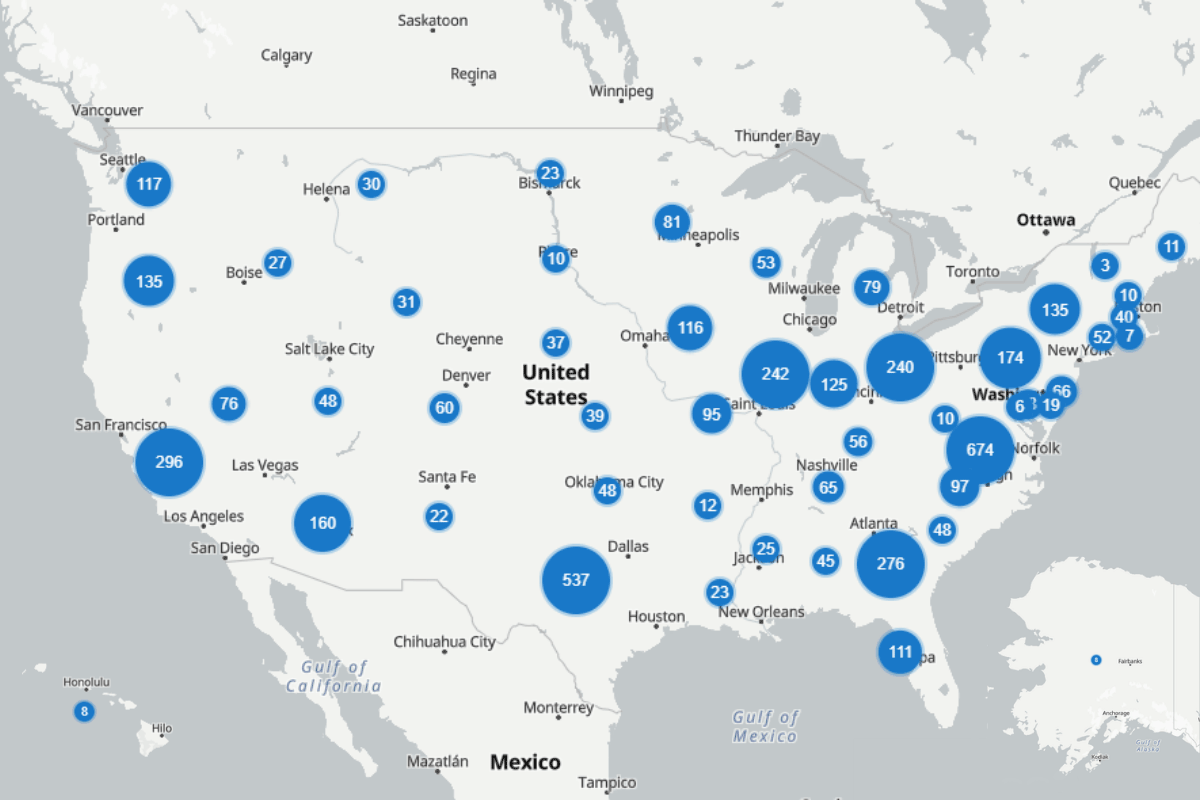
At least one of the more than 4,700 (opens in a new tab) data centers in the U.S. can be found in every state. Many are longstanding small data centers that consume smaller amounts of energy.
The AI factor
Why, then, is there this fervor now surrounding data centers? What has changed?
The race for AI. That’s what’s changed.
The launch of OpenAI’s ChatGPT in 2022 has sparked an explosion of interest in artificial intelligence. This interest and the push to build as many data centers as possible to keep up with the growing artificial intelligence race has created gaps in considering how the centers impact the environment.
This rush to build data centers is leading to strains on water use and electrical grids across the country. Many Americans are unaware of how a data center can impact our natural resources. That includes the water footprint (opens in a new tab) that comes with every AI prompt. This problem is bigger than most realize because many planned or developed AI data centers are in water-strapped areas.
Data centers also often rely on water evaporative cooling (opens in a new tab) to keep their servers from overheating. While that keeps servers cool, the process consumes a massive amount of water. And it must be continuously replaced.
What makes this type of cooling infrastructure most alarming is that U.S. analysts predict that data center water consumption will reach 150 to 280 billion liters annually (opens in a new tab) by 2028. Where does that leave the water that is needed to sustain other areas of life?
Effects on Georgia and Texas communities
Newton County, Georgia, is experiencing the effects of a new Meta data center. The massive 2.5 million-square-feet complex is disrupting those who live in and around the area. One resident (opens in a new tab) who lives less than 400 yards from the center said she no longer can drink water from her well. The data center’s construction caused excessive build-up of sediment. As a result, she now hauls water in buckets to flush her toilet.
This experience is unfortunately not unique. Newton County residents are experiencing extreme impacts in their water sources. Georgia’s Flint River, which flows through Newton County, is now cloudy and brown. This is not its natural color, according to local non-profit advocacy groups. (opens in a new tab)
Flint River is not the only river seeing this type of impact from data centers. Effects (opens in a new tab) are evident in many areas where a major data center has been constructed.
If this mass use of resources continues, we could start to see loss of water supplies in many drought-prone areas. This is happening in real time in Texas. The state has the largest concentration of data centers outside of Virginia and is quickly closing in on them.
Texas, one of the most drought prone states, (opens in a new tab) has over 248 data center projects planned for the next few years. This is a major topic of concern for residents. Data centers are not just a drain on water sources. They also strain the electrical grid, which has been a problem for many years in Texas.
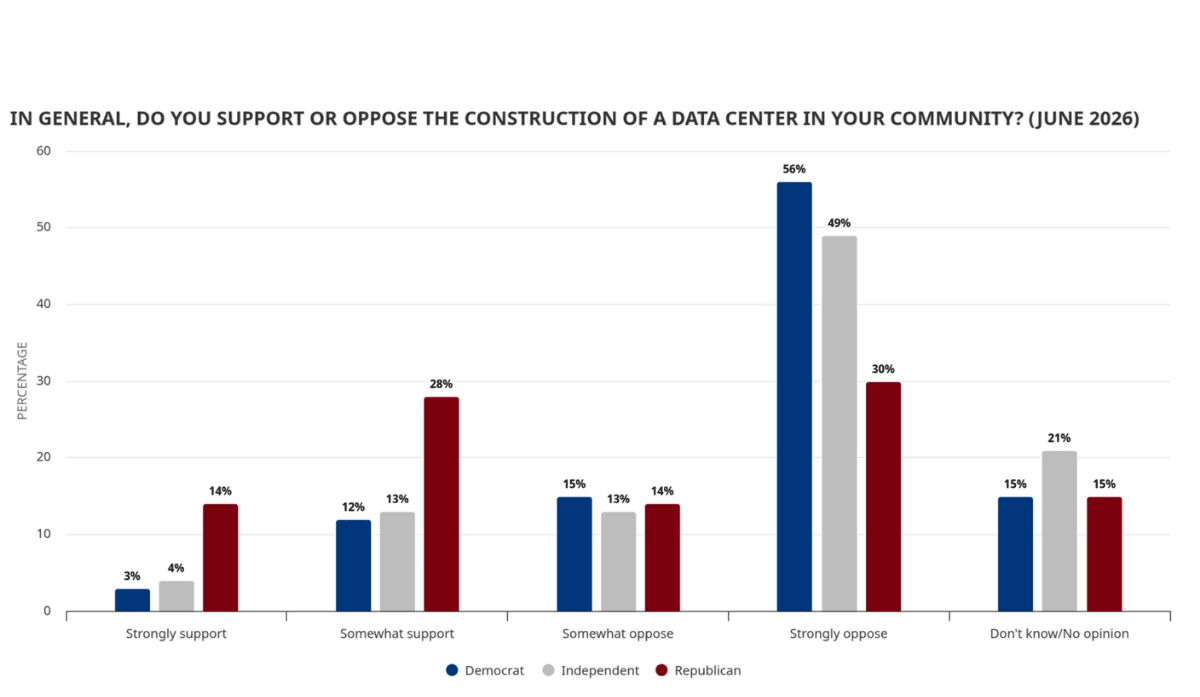
As this topic rapidly evolves, residents and state politicians have responded. With most Texans saying that they oppose data centers (opens in a new tab), politicians from GOP Governor Greg Abbott to Democratic Senate nominee James Talarico are making their stance known.
Governor Abbott recently paused (opens in a new tab) industry-wide approvals on data centers until the state receives more information about their power and water use. This comes with some criticism from President Trump, who says the decision is a mistake.
It seems, though, that Abbott is making the right decision. Many Texans agree (opens in a new tab) that more data centers may not be the best idea for a state with already strapped resources.
As noted above, this issue is even bipartisan in Texas. Democratic Senate nominee Talarico also wants tighter regulations (opens in a new tab) on data center development. “Texas should be a leader when it comes to innovation and technology, but that only works if Texans get a say and get a share of that economic growth — and that’s not what’s happening right now,” he recently said.
Data centers are the issue that most Texans seem to agree on now, regardless of political party. This is so in other states with similar situations (opens in a new tab).
As more data centers are planned nationwide, residents and wildlife will continue to suffer the impacts. A study published in the Science Advances journal (opens in a new tab) found that EMF exposure from data centers, electrical substations, and high-voltage power lines — particularly those supporting AI data centers — have a negative impact on bees. There already have been record losses to beehives (opens in a new tab) across the United States over the last two years.
There are also reports that residents who live around data centers cannot sleep due to the noise emitted (opens in a new tab). Water is polluted (opens in a new tab), electrical grids are strained (opens in a new tab), and who knows what other unintended consequences are lying under the surface waiting to wreak havoc.
Cities and towns nationwide are not prepared for this AI revolution and its sustainability costs. As more attention is brought to this issue, legislation is being introduced nationwide that will regulate the resources data centers can use. This may halt some of the environmental impacts.
There is hope with more states pushing back. Allies to this cause like Erin Brockovich (opens in a new tab) are bringing awareness and transparency to the topic (opens in a new tab). Slowing down production will hopefully mitigate the damage already done and start us on a path toward a more sustainable data center revolution.
Bryana Stephens is a 2nd year student in SMU’s Master of Public Policy program and a Niemi Fellow at the George W. Bush Institute.
Request information
To learn more about the Master of Healthcare Administration, Master of Public Administration and Master of Public Policy programs at SMU and download a brochure, please fill out the form. You can also talk one-on-one with an enrollment specialist directly by calling 469-871-6018.
