
The Public Square · Interview
Former Dallas Mayor Tom Leppert backed an improbable plan to build a park over a downtown freeway. Nearly two decades later, he sees another rare opportunity to reshape the city’s urban core.
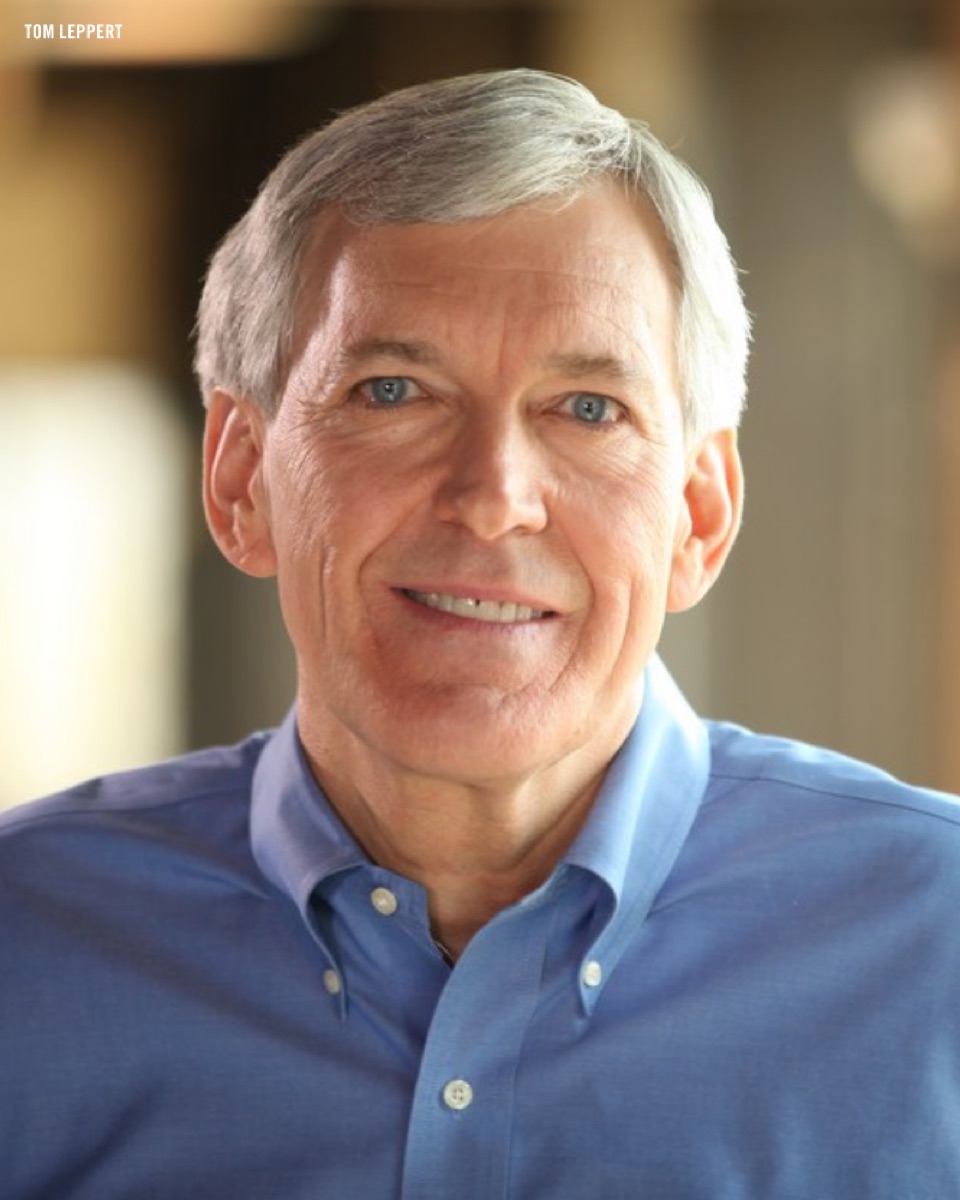
Before I asked former Mayor Tom Leppert (opens in a new tab) my first question about downtown Dallas, I offered a warning of sorts. I wasn’t only interested in the vision he’s aligned himself with for downtown. I also wanted to understand the person behind the position. Too often, policy and institutions become stories lost in outcomes. I wanted this one to remain a story about people.
Interestingly enough, that’s where the conversation started. I asked Mr. Leppert, who now co-leads the University of Texas at Dallas’ Brain Health Project, to close his eyes and picture a successful downtown and share with me what that would look like. The former business executive started talking about people: people walking their dogs and people walking with strollers. Leppert shared how the shift from Central Business District to livable neighborhood happened while he was at City Hall from June 2007 to February 2011.
And yet, our discussion of the people is an outcome of policy. The places where Dallasites choose to live, work, and play are shaped by public decisions about investment, development, infrastructure, and transportation that create the experiences and magnetism of a thriving downtown.
This was illustrated when the former mayor shared a story about his ride home after attending an event downtown one evening. While two officers assigned to his security detail were complaining about navigating ALL the traffic, he hid his smile in the backseat. But he was proud. Traffic congestion to him in the late evening was a sign of his success as mayor. People were choosing downtown again.
Me? I lived a mile outside of downtown at the time and commuted via DART daily to my work in the heart of the city. The shifts were palpable. I got dropped off at Main Street Garden, a new park that previously had been a parking garage and vacant building. Even at my early drop-off time of 6:15 a.m., there was life in the park that promoted the perception of safety. I wasn’t alone.
Downtown’s changing trajectory
The conversion from parking lot to Main Street Garden was among the first signs that downtown’s trajectory was changing, and that momentum has continued since Leppert left office.
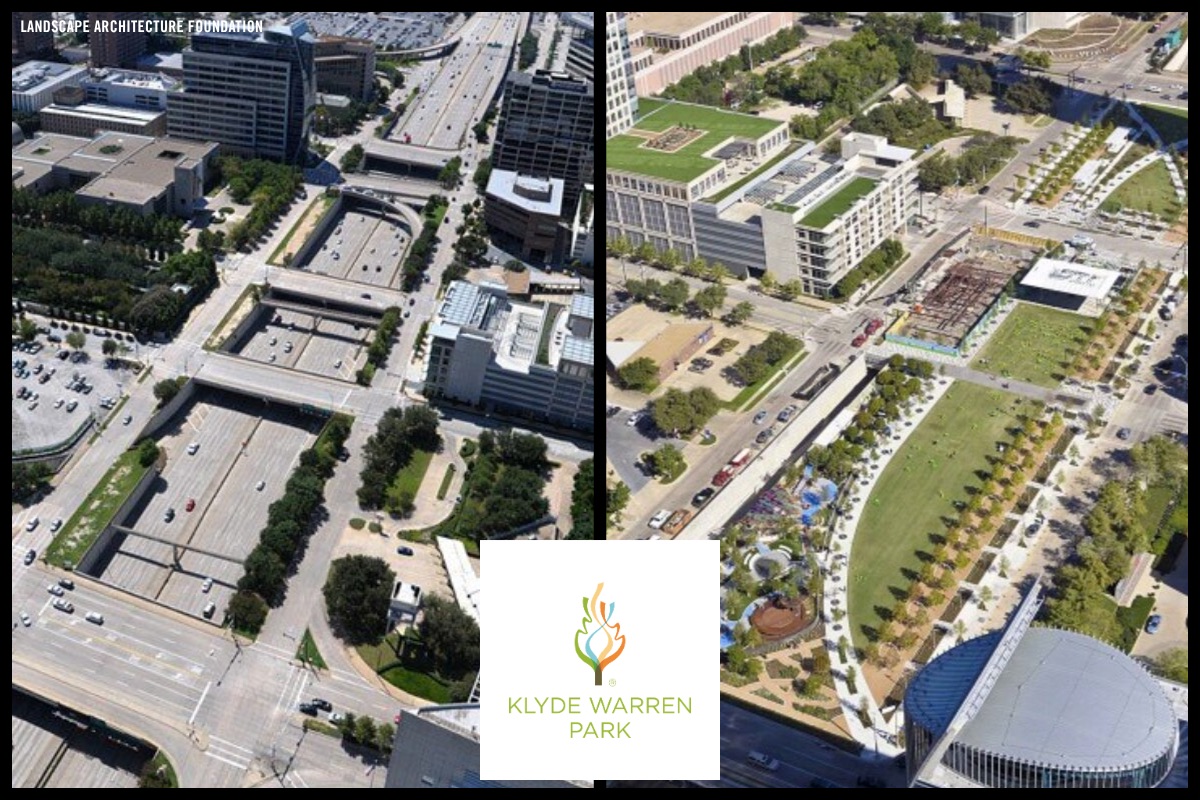
Klyde Warren Park opened in October 2012, not long after he exited City Hall. The one-term mayor is proud of his efforts to support the park before he was elected and during his four years in office. Leppert noted that he was among the early supporters that took arrows for supporting a park on top of a highway. But he saw the opportunity as a piece of critical infrastructure that would catalyze a shift from a separate downtown and uptown to a unified urban core that the success of the broader metroplex depends upon.
Me? While I wasn’t among those throwing arrows, I was vocally skeptical.
I knew the first time I stepped foot there that I had been wrong. I had just moved downtown and brought my dog to the park. It quickly became our family’s favorite place. The 5.4-acre green space was built intentionally for everyone to use, and it’s been a hive of community activity since then. The popularity resulted in a series of parkwide enhancements in 2021 and 2022 and now Klyde Warren Park is preparing for a 1.7-acre expansion west.
The surrounding skyline has also expanded, both north and south. At grade, it restored the street-level connection across the divide that Leppert thought was “absolutely critical” to the connectivity he anticipated and envisioned. He saw the transformative potential in an intervention many people, including me, doubted.
Klyde Warren Park and Main Street Garden along with Civic Garden (formerly Belo Garden) were among the earlier generation of downtown parks in Dallas. These investments in public space have created a sequence of success in the continued connectivity of Dallas’ urban core.
But the trajectory has not been linear. The tragic and traumatic events that unfolded on the evening of July 7, 2016, which left five Dallas law enforcement officers dead and nine more wounded; the paralyzing impacts of the pandemic; and the passion, frustration, and fear present during the Black Lives Matter protests are among the moments that have tested and reshaped downtown.
Still, the cumulative investments and stewardship of downtown have persevered even while the problems confronting it have evolved. During our conversation Leppert recalled inheriting a central city dotted with a collection of long-vacant high-rises. Office vacancy remains an opportunity looking for adaptive solutions, but the issue isn’t manifesting as visible street-level blight.
The recent climate has felt a bit like an avalanche of bad news. Bank of America (opens in a new tab) is moving to the north side of Klyde Warren Park. And AT&T (opens in a new tab) has announced that it has chosen a new headquarters in the suburban north.
In our conversation, Leppert celebrated the public-private partnerships that have developed recently to address safety in the area. The one-time White House Fellow also touted the success of partnerships addressing the needs of those experiencing homelessness. For Leppert, those gains are reflected in the individual areas of downtown that are thriving today.
Today, he thinks that while we’ve built successful individual areas — Main Street, Farmer’s Market, Dallas College District, West End, and the Arts District — we haven’t successfully connected them in a way that feels accessible. Nonetheless, the continued momentum of investment shouldn’t be denied as the city’s new Convention Center District creates an opportunity — one Leppert thinks Dallas should capitalize on. The cost? Dallas City Hall.
The City Hall dilemma
Dallas voters approved the development of a new convention center in 2022. Visit Dallas (opens in a new tab) notes that the center will anchor a new Convention Center District offering a walkable experience with restaurants, retail, lodging and entertainment.
Towards the end of 2025, the Dallas development community and city officials were discussing the potential of abandoning City Hall (opens in a new tab). Some saw moving out of the I.M. Pei-designed building could provide an opportunity to extend the Convention Center District. Plus, some said deferred maintenance costs could make it too costly to continue to occupy City Hall.
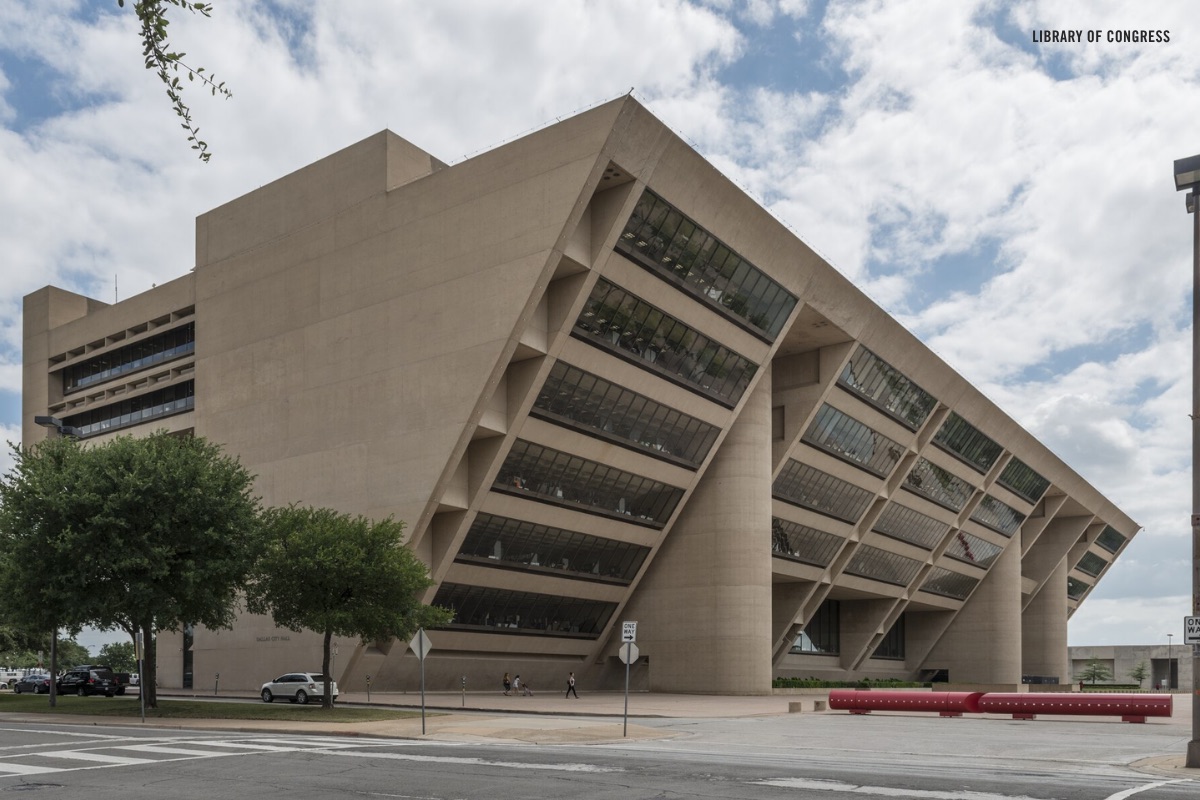
Then the Dallas Mavericks entered the discussion. With their lease at the American Airlines Center set to expire in 2031, the team started considering where it would play next. And, with some in Dallas still lamenting the loss of Luka Dončić in what they consider the worst trade in NBA history, the Mavericks entered into a nonbinding agreement for the site of a former mall in North Dallas (opens in a new tab). The announcement seemingly removed themselves from what could become Dallas’ next polarizing development battle. Still, City Hall’s future remains uncertain.
And me? I have a Save City Hall sign proudly displayed in my front yard.
As we continued to chat, our conversation shifted from the people already choosing downtown to those who haven’t yet made that choice. Leppert noted that the success to date is a foundation for continued strategic investment. We’re already seeing some of that with the convention center that he wants to further capitalize on with development of an adjacent entertainment district.
A new entertainment district
Leppert wants to give more people a reason to choose to come downtown. He didn’t offer solutions for a new City Hall but instead recognized the present-day context that creates the foundation for success. A path he very visibly sees.
He shared that we can further enhance connectivity from this new entertainment destination with lighter lifts like streetscape enhancements that create better connectivity for when more people opt into them individually.
AT&T Discovery District is a downtown destination in the center of AT&T’s current global headquarters where “tech, culture and entertainment combine to create unique experiences.” When visiting, there are interactive art displays, a food hall to satisfy any palate, and a 104-inch media wall where visitors can watch local teams play or join for movie nights on the lawn.
For Leppert, Discovery District offers a small-scale example of what intentional investment can create. But the opportunity he sees a few blocks south of there with a new entertainment district is significantly larger.
As he continued to share about a new entertainment district’s opportunities, our conversation collided with the policy debate. We shifted to the arguments (opens in a new tab) that are already circulating: the convention center investment, the entertainment district, the Mavericks, City Hall’s functionality, the importance of the tax base, the highest and best use of the site (development value), connectivity, and the “once-in-a-generation” opportunity.
Leppert believes it’s time to “pull all the pieces together” that can make Dallas realize its full potential as a vibrant urban core. He argues the city should invest in this moment that will propel us forward into the future. He warns that if we don’t meet the moment, the burden of the waning commercial tax base will transfer to residents across the city.
The right debate for downtown
Leppert also suggested that perhaps we’re having the wrong debate. The question, he said, isn’t about a building or even a sports franchise. It’s simpler: What is best for downtown?
For Leppert, the answer is creating a nucleus of activity where City Hall now sits and that generates jobs, draws people in, and gives them reasons to stay. The building, the franchise, and even the entertainment district are not the outcomes. They are potential tools for creating the kind of urban core that the larger metroplex depends upon.
While Leppert provided his systems view, we found ourselves also chatting about my lived experience. And it wasn’t rejected. Instead, he incorporated it further into his arguments. The entire time I thought to myself, this is why he was mayor. He’s really good at this because he’s truly listening to me.
We both want the best for downtown. We both recognize its full potential. We both want people to opt in. We both want people to choose it as a place to live, a place to work, a place to learn, and a place to play. Where we differ is in the policy choices we believe will get us there.
Our chat occurred during the brief period this summer when downtown found itself on the world’s stage. People from all over the world came this summer to watch soccer. After Norway won in Arlington, Erling Haaland found (opens in a new tab) his way to Wild Bill’s Western Store in the West End where he went viral buying cowboy boots, hats, and other western gear while wearing a shirt that said, “Y’all can kiss my Dallas.” (opens in a new tab)
Dallas had the opportunity this summer to see what happens when a major sporting event generates repeated reasons to gather, explore, eat, drink, celebrate and experience the city beyond the event itself. Leppert is championing a development that would allow the southern part of downtown to have an anchor capable of generating some version of that communal energy on a recurring basis. And, if everyone popped by Wild Bill’s and bought a $750 taxidermy raccoon like Haaland took back to Norway (opens in a new tab), Wild Bill would definitely be happy.
And me? My sign is still in the front yard. My reasons for wanting to save City Hall haven’t changed. But the conversation shifted the certainty with which I hold my position. We both landed at the same outcomes when we talked about the people.
Ashlee Hueston is a second-year student in SMU’s Master of Public Policy program.
Request information
To learn more about the Master of Healthcare Administration, Master of Public Administration and Master of Public Policy programs at SMU and download a brochure, please fill out the form. You can also talk one-on-one with an enrollment specialist directly by calling 469-871-6018.
