
The Public Square · Essay
After completing my Ph.D., I received a congressional fellowship where I worked for a year as a legislative assistant for one of the leading sponsors for campaign finance reform. On my last day, I found myself standing on the House of Representatives floor at 3 a.m. listening to the last of the poison pill amendments being defeated. I knew I would leave Capitol Hill with only one chamber having passed campaign finance reform. I left that day to enter my teaching career and go into the classroom, a little savvier and with a fuller understanding of how to turn a policy idea from a scribble on a napkin to a piece of legislation.
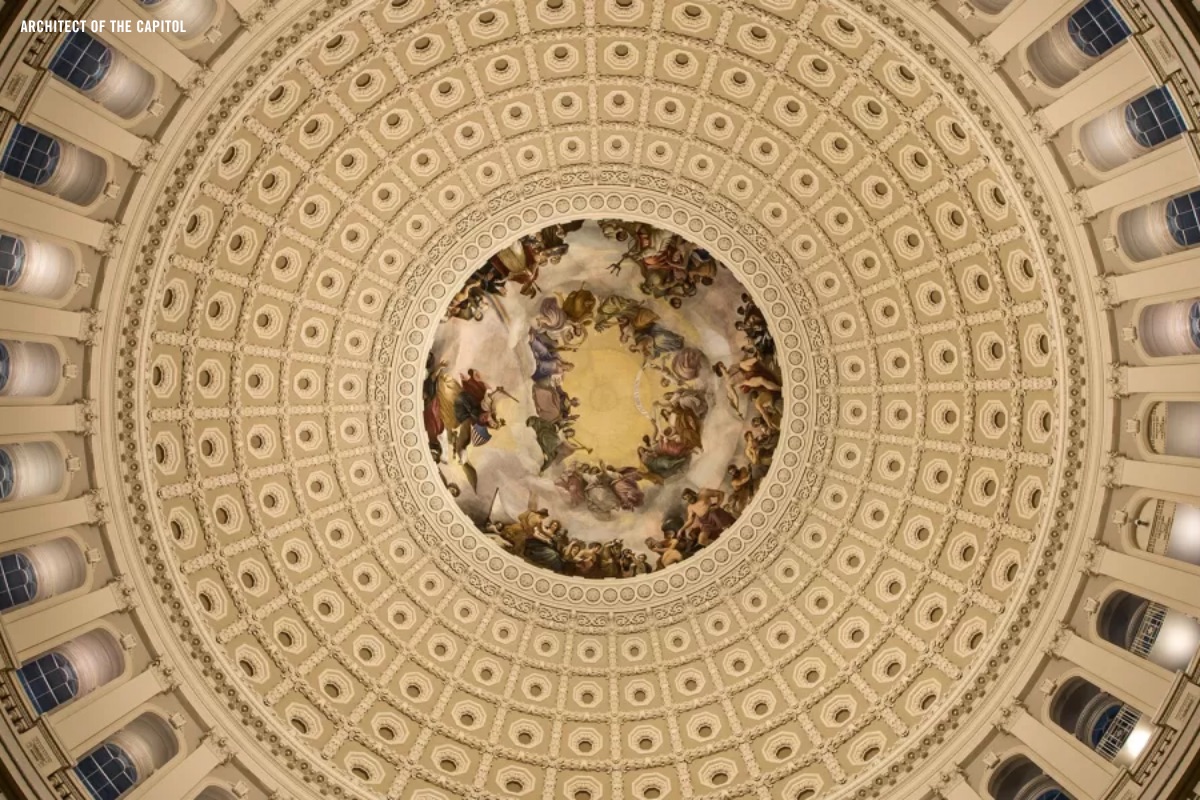
However, when I look back on the impact of my work during my fellowship year, I recognize that within six months a Senate filibuster killed the bill into which I poured so much effort. This was an unusual start to a career as a political science professor, but one that laid the groundwork for my fascination with leadership, individual ingenuity, and the ability to affect change.
I also came away with the idea that a law is really a solution designed to solve a public problem. But without resolution of that problem, our pursuits as policy experts and as administrators steeped in the bureaucracy and our job are not finished.
Becoming a practitioner
Fast-forward and this professor once again returned to be a practitioner because I heard the phrase “that’s just how we do it” one too many times. I have often told my students that if they see a problem that needs attention and effort, then they should not just stand on the sidelines. They should get onto the field and go make a change.
I found myself having to live by these words. So, in 2016 I ran for and was elected to the Arlington, Texas, City Council in an at-large position. During my first term, I immediately had to face the decision of trying to retain the Texas Rangers in Arlington by building a new ballpark — the very meaning of a public-private partnership. I also worked on issues like a smoking ordinance where I tape-measured patios to ensure small businesses would not be deleteriously affected when the ordinance was implemented. And I worked on a short-term rental ordinance to ensure private property rights are balanced with neighborhood safety.
I also served during the COVID pandemic, perhaps the most significant public problem of our lifetimes. During COVID, I was chair of the Continuum of Care for Tarrant and Parker Counties, a program designed to develop supportive housing and services for homeless persons.
We had recently redesigned the Continuum of Care to include partners across the spectrum to deal with issues related to homelessness, such as mental health and addiction. During COVID, though, this new design was immediately stress-tested as we were making, implementing, and assessing the effectiveness of policy decisions in real-time.
We held daily Zoom calls in the morning to discuss how we would bring individuals off the streets and put them into a setting where there could be properly social distanced to help stem the spread of COVID. We then would meet the next day to discuss how the prior day’s activities worked.
What I learned
As a political scientist and public policy scholar, and now as an elected administrator, I had never dreamed the policy cycle would be this fast-paced. Yet decisions needed to be made under limited control, with limited information, and under unprecedented stressful circumstances.
Since leaving office due to term limits, I now can see and appreciate the impact of the work I did while serving. For example, one day I was walking in the Arlington Entertainment District comprised of AT&T Stadium, Globe Life Field, Texas Live!, two Loews hotels and a convention center, the One Rangers Way apartment complex, and the Texas Rangers’ former ballpark now known as Choctaw Stadium. As I walked down the street to the recently opened Starbucks on a cold blustery day, I stopped for a moment — not because I was cold — but because I realized there was a wind tunnel.
You see that tunnel did not exist prior to me taking office, and many of those buildings that existed were years in the planning. I merely had the privilege of casting a yes vote. But for a short time, I was one of five out of nine that helped bring these things to life.
More recently, the FIFA World Cup games in Arlington made me reflect on the incredible public-private partnership requiring years of preparation, and coordination among state, local, and federal levels of government, and national and international non-governmental organizations. Hosting the games was an incredible economic development opportunity for the city and the region. It also offered the chance to meet with individuals from around the world to watch greatness unfold and to mingle in streets with different languages and different names.

In the months ahead we will have a full accounting of the true economic impact of the World Cup. But we already know many of the intangibles resulting from this partnership.
- Did it bring attention from the world for just a moment to the United States and to a place called Arlington, Texas? Yes!
- Did it introduce a generation of Americans to the power of sport? Yes!
- From the lens of policy scholars and practitioners, did it show how to find resolutions, if only for a short time, to interlocal governmental public problems such as transportation issues, Wi-Fi availability, and coordination among businesses, non-profits, and multiple levels of government? Yes!
- And, perhaps importantly, did it show us a vision of what is possible when the public and the private sectors work together? A resounding, YES!
Advancing my lessons forward
What lessons did my experience at the ground level of policy making and implementation teach me, and why am I back in the classroom at the 30,000-foot level talking about theory but putting it to the test with real-world problems? Because it is important that our policy scholars and our public administrators of the future understand the world is lived at light speed. And it is a world where theory does not always meet practice, and practice does not always meet theory.
However, we must be critical and look deeper to appreciate all the aspects of the policy cycle as we deal with public problems. And we must try to make the best and most informed decisions as policy is crafted, implemented, and assessed in real time.
So, why am I back in the classroom? For me, it begins with you.
So, ask yourselves why you are a student of public policy, public administration, or health administration? From what I have seen, you are a public policy scholar because you want to solve problems and do so successfully in an accountable manner. You also want to be an administrator not because you want to check a box but because you want to have an impact so that one day, when you reflect what you have helped accomplished, your wind tunnel will find you.
Dr. Victoria A. Farrar-Myers, founder and executive director of the Nexus Center for Civic Engagement and Leadership, teaches a bureaucracy course in SMU’s Master of Public Administration program.
Request information
To learn more about the Master of Healthcare Administration, Master of Public Administration and Master of Public Policy programs at SMU and download a brochure, please fill out the form. You can also talk one-on-one with an enrollment specialist directly by calling 469-871-6018.
